
Two Points of View
Why Relationships Need Both Voices

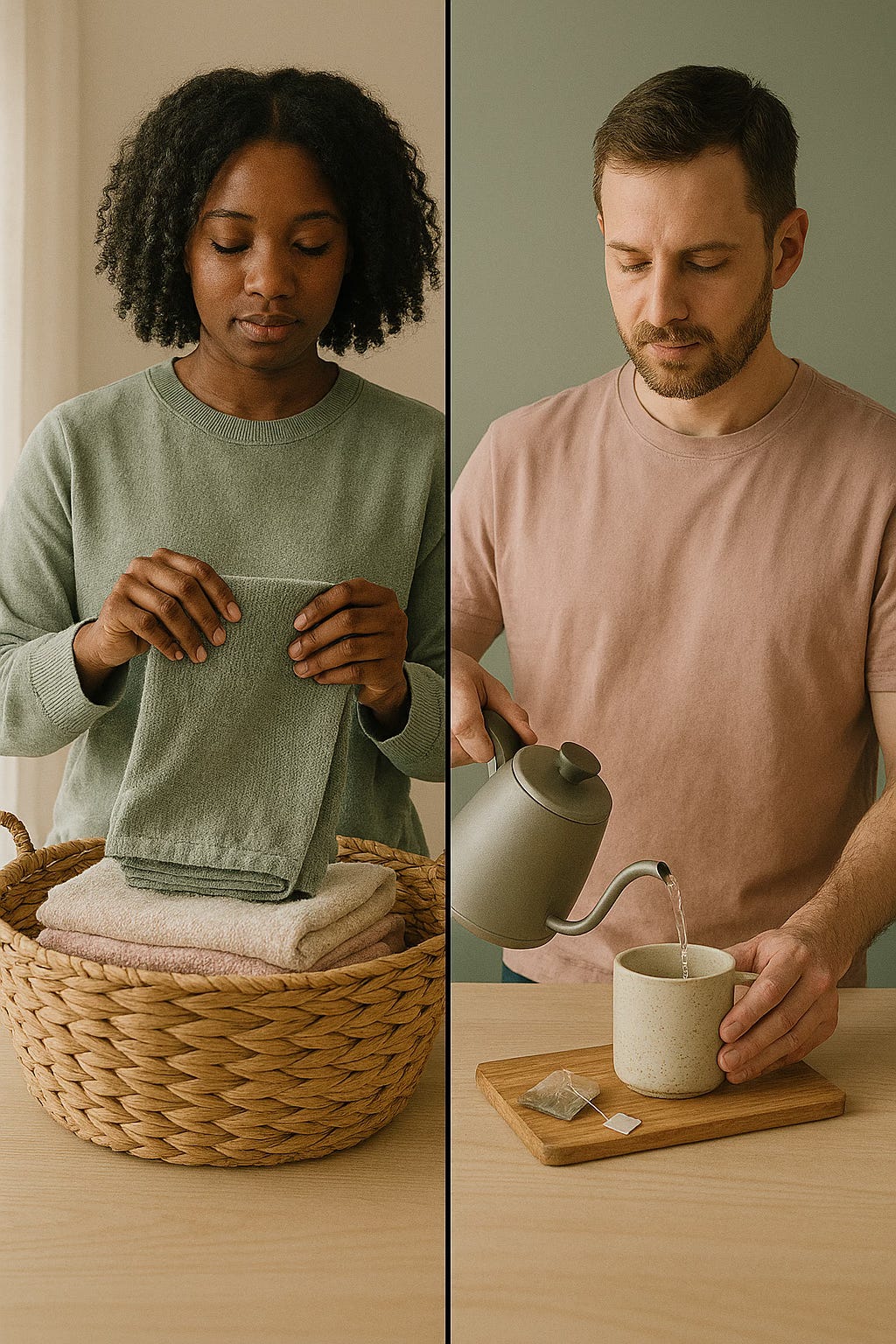
A lasting relationship is built from more than a single perspective. Where once the household was often organised around a woman’s point of view, modern life asks for a shared outlook: two people, two perspectives, one home. This piece explores why that balance matters, how it has changed, and what practical steps we/couples can take to make a partnership thrive.
How the idea has changed
Historically, the home was frequently shaped by the woman’s role, because she spent most of her time there. That arrangement made practical sense in its era, but it was never intended to be the only valid way to run a partnership. Today, with men more present at home, and many people working remotely, the household is increasingly a shared space. That shift calls for a joint point of view rather than a single, dominant one.
Roles, biology, and balance
Of course, biology and social expectation both shape what partners bring to a relationship. A woman may still carry responsibilities and capabilities—especially around childbirth and early childcare—that a man cannot replicate. Acknowledging those differences is honest and practical. At the same time, both partners must be equally treated and active in decision-making, daily chores, emotional labour, and planning for the future. Balance is not about erasing difference, but about combining strengths.
Mutual commitment and conscious effort
For a coupling to work, both partners need to want it to work. That means regular contributions from each person, and ongoing awareness of the relationship’s needs. Love alone is not enough; attention, effort, and intention are required every day. Small, consistent acts—checking in, sharing tasks, listening—add up to a resilient and great partnership.
Friendship as the foundation
“It is not a lack of love, but a lack of friendship that makes unhappy marriages.”
Friendship brings respect, shared humour, honest communication, and the ability to be companions through ordinary life. When partners are friends first, they are more likely to negotiate differences, forgive mistakes, and enjoy each other’s company even when things are hard. Friendship makes the practical work of partnership feel less like duty, and more like shared life.
Rethinking compromise
“Compromise” has become an unpopular word, but beneath the surface it simply means meeting each other halfway—understanding, adapting, and sometimes yielding for the good of the whole. Compromise is not losing yourself; it’s choosing the relationship over being right in a single moment. When both people practice it, compromise becomes a tool for growth rather than a sign of weakness.
Practical ways to hold two points of view
Share decisions
— Make household and life choices together; alternate lead roles when appropriate.
Divide labour consciously
— Assign tasks by agreement, not assumption; revisit the division as life changes.
Schedule check-ins
— Regular conversations about needs, finances, and feelings keep both perspectives visible.
Cultivate friendship
— Prioritise time for shared interests, laughter, and curiosity about each other.
Practice small compromises
— Use everyday disagreements as opportunities to learn how to meet halfway.
Task Rotations
— So no one is stuck with the invisible work.
In Closing
A healthy union doesn’t erase difference; it weaves two points of view into a stronger, shared life. When both partners bring their perspectives, their effort, and their friendship, the relationship becomes a place, where two people can grow together rather than one person carrying the whole weight.
Thank you for reading. I hope you found it enjoyable.